

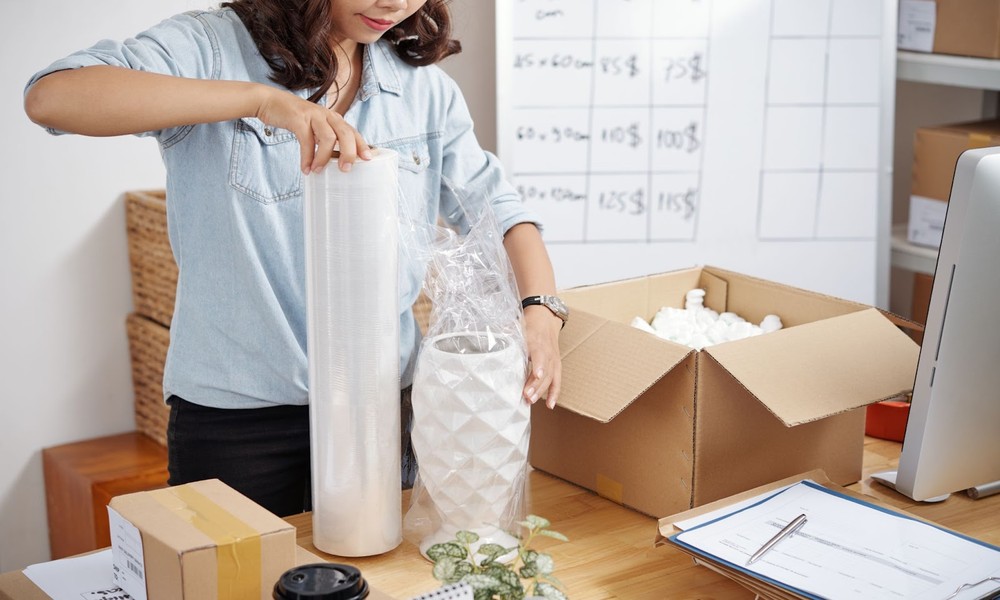
The most common reason packages arrive broken has nothing to do with rough handling by carriers. It comes down to how they were packed in the first place. At Newport Beach Mailboxes & More, we see it regularly – boxes that were closed with a prayer and not much else. A wine glass wrapped in a single sheet of paper. A ceramic figurine rattling around in a box two sizes too big.
Packing fragile items well is a skill. Once you understand the logic behind it, you can protect almost anything.
Start With the Right Box
Box selection matters more than most people realize. The instinct to reuse an old Amazon box seems harmless, but boxes weaken significantly after a single shipment. The corrugated walls compress, the corners lose integrity, and what feels sturdy in your hands may not survive a 200-mile journey on a conveyor belt.
Choose a new, double-wall corrugated box for anything genuinely fragile. Double-wall boxes have two layers of fluting between the outer and inner liners, which gives them far better crush resistance than single-wall boxes. For extremely heavy items like stone sculptures or dense ceramic pieces, triple-wall is worth the added cost.
Sizing is equally important. You want roughly two inches of cushioning space on every side of your item. Less than that and you run out of room for adequate padding. More than that and the item can shift too freely inside, building up momentum during drops.
Wrapping: The Part Most People Rush
Bubble wrap is the default for fragile items, and it works well when used correctly. The bubbles should face inward, against the item, not outward. This seems counterintuitive to some people, but the cushioning effect comes from the bubbles compressing against the surface of what you’re protecting.
Wrap each item individually. If you’re shipping a set of glasses, each one gets its own wrap before they go anywhere near each other. Use at least two to three layers and secure the wrap with packing tape so it doesn’t unravel in transit.
For items with flat surfaces – framed photos, mirrors, ceramic platters – foam sheets often work better than bubble wrap. They conform more evenly to the surface and prevent the pressure points that bubbles can create on certain materials. Add a layer of cardboard on each flat side before the foam wrap for added rigidity.
Packing paper is useful for filling voids and wrapping items that don’t need heavy cushioning, but it compresses quickly and shouldn’t be your primary protective layer for anything truly delicate.
The Fill Matters More Than You Think
Once your item is wrapped, how you fill the remaining space in the box determines whether it survives the trip. Packing peanuts are still widely used, but they have a significant drawback: they shift. An item packed loosely with peanuts can migrate to a corner of the box during shipping, where it’s far more vulnerable to impact.
If you use peanuts, pack them densely enough that the item stays centered when you close the box and give it a firm shake. If you can feel the item moving, add more fill.
Air pillow cushioning and foam-in-place systems hold items more reliably because they create a custom fit around the object. These are worth considering for high-value or unusually shaped pieces where standard fill won’t keep things in place.
The Double-Box Method
One technique worth knowing: place your wrapped item inside a smaller box with cushioning, then place that box inside a larger box with two inches of fill all around. This creates an extra layer of impact absorption and is standard practice for shipping antiques, electronics, or anything with a replacement cost that makes you nervous. Professional shipping centers use this method for good reason.
Newport Beach Mailboxes & More: When It Makes Sense to Let the Experts Pack It
There’s a version of this that you handle yourself, and there’s a version where you bring it to people who pack things for a living.
Knowing which box to choose, how much cushioning to use, and how to configure the fill for a specific shape takes real experience. A ceramic lamp is a different problem than a set of wine glasses, which is a different problem than a vintage mirror with an ornate frame. What works for one item can be entirely wrong for another.
At our Newport Beach shipping center, we carry materials that most people don’t keep at home: foam sheets in multiple thicknesses, double-wall and triple-wall corrugated boxes, air pillows, and specialty wrap for electronics and artwork. Having the right material for the specific item isn’t a minor detail. It’s often the difference between arrival and damage.
For items of significant value or sentimental weight, professional packing is the reasonable choice, not a luxury.
Before You Seal the Box
A few things worth doing before the tape goes on. Write “Fragile” on multiple sides of the box and include any handling instructions if needed. This doesn’t guarantee careful handling, but it signals what’s inside to anyone who picks it up.
Place a slip of paper inside the box with your contact information and the recipient’s address. If labels peel or smear in transit, this internal note may be the only way to reunite the package with its destination.
Finally, photograph the packed item and the sealed box before you drop it off. If a claim ever needs to be filed, documentation of the packing condition is the first thing a carrier will ask for.
Ready to Ship Something That Matters?
The line between a package that arrives intact and one that doesn’t usually comes down to decisions made before the box is ever sealed. Get the box size right, wrap thoroughly, fill completely, and when the item is something you can’t replace, consider having it packed by someone who does this every day.
Newport Beach Mailboxes & More is open and ready to help with packing, shipping, mailbox rentals, and more. Bring it in – we’ll make sure it gets there.
